Welcome to
The Hive
At The Hive, we bring together a dynamic community of HR leaders, compliance experts, technologists, and thinkers who care about getting identity, hiring, and trust right.
Expect practical insights, bold ideas, and real-world stories from across the employment and identity landscape. Not just from ZipID, but from people like you. Because when we swarm together, we build smarter.

Identity Fraud, Misuse & Work Authorization Spoofing is on the Rise
Employers are more at risk than ever from both job applicant fraud and ICE raids, creating an employer squeeze that emphasizes quality control in hiring and adherence to I-9 compliance

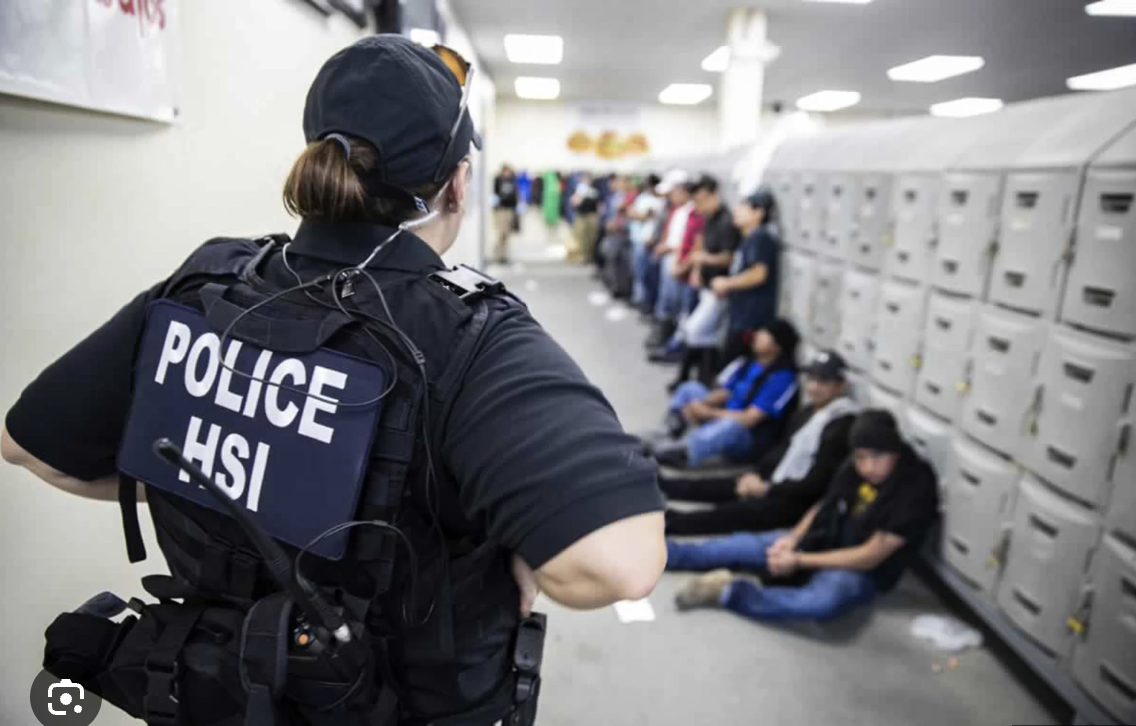
When ICE agents walked into Glenn Valley Foods in Omaha in June 2025, they weren't just looking for unauthorized workers. They found a identity theft operation that had been running in plain sight — approximately 70 workers using stolen Social Security numbers and identities to unlawfully obtain wages, health benefits, and employment authorization, leaving more than 100 real American victims to face devastating financial, emotional, and legal consequences. zipidapp
The victims weren't abstract. A healthcare provider denied medically necessary prescriptions to a victim in Pennsylvania whose identity had been stolen. A disabled victim in Texas struggled to receive Social Security disability payments because someone was fraudulently using their identity to earn wages. A victim in Colorado was asked by the IRS to repay more than $5,000 after their income was falsely inflated. A nursing student in Missouri lost college tuition assistance because it was fraudulently reported that they earned too much money. zipidapp
Here's what made this case particularly alarming for employers: Glenn Valley Foods had participated in E-Verify. The enforcement action was initiated after a Homeland Security audit of the company's Forms I-9 identified suspected document fraud. E-Verify didn't catch it. The I-9 process — done the traditional way — didn't catch it either. ICE
The Threat Is More Sophisticated Than Most Employers Realize
Criminal networks are involved in the production and distribution of counterfeit identification documents — fake Social Security cards and permanent resident cards specifically designed to circumvent employment verification systems like E-Verify. These aren't crude fakes. They are purpose-built to pass the checks most employers rely on. Bradley
At the same time, ICE and the IRS signed a memorandum of understanding allowing Homeland Security Investigations to access IRS employer records for immigration enforcement purposes — meaning ICE can now request W-2 and employer tax data to identify businesses employing workers whose Social Security numbers don't match. The data trail leads directly to employers. HSToday
Your Liability Doesn't Require Intent
ICE's current enforcement posture targets employers directly. ICE's rate of Notices of Inspection in the first half of 2025 was at least ten times the rate of 2024. In the first seven months of the current administration, ICE publicly reported at least 40 worksite enforcement actions resulting in over 1,100 arrests. HSToday
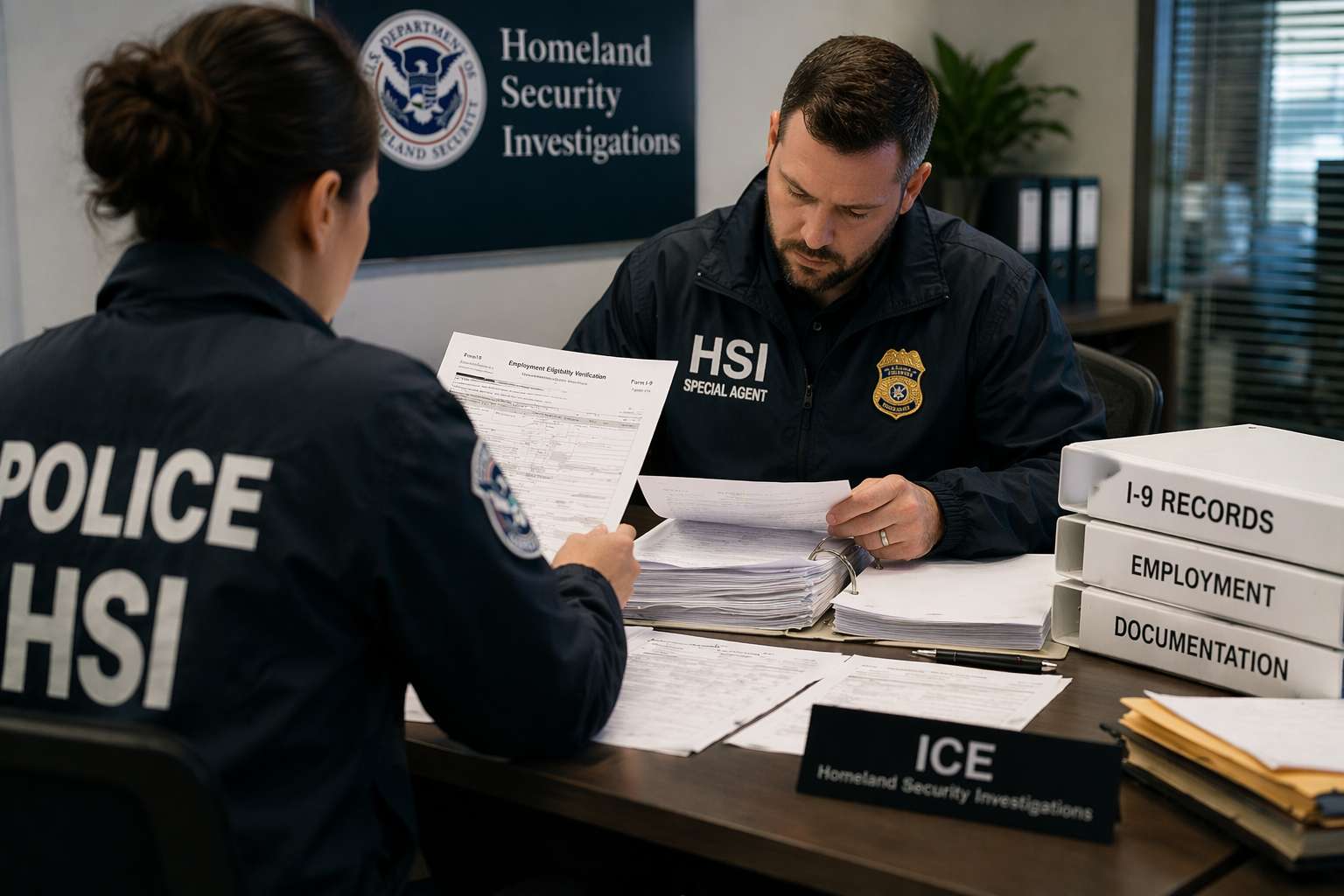
An I-9 audit requires no warrant and no probable cause. If your forms are found to contain document fraud — even fraud you didn't knowingly facilitate — you are exposed.
What Stops This
The gap isn't effort. Most HR teams are doing exactly what they were trained to do. The gap is tools. The I-9 was designed to collect documents, not verify them. Biometric identity verification — matching a live selfie to the ID photo at the point of hire — is the only way to confirm that the person presenting a document is actually the person it belongs to.
That's precisely what ZipID was built to do. NIST-validated facial recognition at 99.8% accuracy with liveness detection. Document fraud screening. A fully ICE-ready audit trail. Completed in under 8 minutes by anyone — no I-9 expertise required.
The Glenn Valley Foods case was a warning. The question is whether your hiring process is built to catch what E-Verify can't.
Janice Kephart is the Founder and CEO of ZipID and one of the most recognized public voices on national security, identity, and border policy in the United States. Former counsel to the 9/11 Commission, she authored the federal identity doctrine underlying today's I-9 compliance framework. She has testified before Congress 19 times on identity-related issues.
Ready to verify your new hires with confidence? ZipID completes the entire Form I-9 process in under 8 minutes, fully compliant with 8 CFR § 274a.2.
Schedule a Demo | View Pricing

Frequently Asked Questions
Is ZipID ICE-compliant I-9 software?
Yes. ZipID is designed to satisfy all five federal electronic I-9 system requirements under 8 CFR § 274a.2 — including compliant audit trails, electronic signature protocols, and secure storage standards. It is specifically designed to meet the March 2026 ICE reclassification that elevated common errors to substantive violations.
As of January 2025, I-9 paperwork violations carry fines of $288 to $2,861 per form under 8 CFR § 274a.10(b)(2). Knowingly hiring unauthorized workers carries fines up to $28,619 per worker for repeat offenses. ICE audit rates in 2025 ran at least ten times higher than the prior year.
ZipID is pursuing certified E-Verify third-party agent status by October 2026. Currently, after the employer signs the I-9, ZipID redirects to E-Verify and automatically populates the resulting case data into the Additional Information field — preserving the complete record for audit purposes.
What is NIST and why does it matter for I-9 verification?
NIST — the National Institute of Standards and Technology — is the federal agency that sets accuracy benchmarks for biometric identity technologies. For I-9 compliance, NIST validation matters because it provides an independent government-verified measure of whether a facial recognition system is reliable enough to trust. ZipID uses NIST-tested algorithms rated at 99.998% accuracy.
ZipID's 1:1 facial recognition is rated at 99.8% accuracy using NIST-validated algorithms — fewer than 2 mismatches per 100,000 verifications. Liveness detection is built in to confirm the selfie is from a real, present person rather than a photo or deepfake.
OCR — Optical Character Recognition — reads and extracts text from government-issued IDs. ZipID uses AI-powered OCR to instantly capture a new hire's ID data and automatically populate the required Form I-9 fields, eliminating manual entry and typos. The new hire confirms the extracted data before it populates the form.
ZipID uses NIST-validated biometric facial recognition to match a live selfie to the photo on the new hire's government-issued ID. AI-powered OCR extracts and autofills document data. Liveness detection and synthetic image screening run on the selfie capture, confirming a real, present person rather than a photo, replay, or deepfake.
Facial authentication is entirely the employer's choice. It confirms that the new hire is who they say they are and that the ID they present matches their live self — especially valuable for remote hires, high-security roles, or industries with elevated identity fraud risk.
How long does it take to complete an I-9 with ZipID?
ZipID completes the entire Form I-9 process — including identity verification, document capture, and E-Verify redirect — in under 8 minutes, for both remote and in-person new hires.
ZipID is an I-9 compliance and identity verification platform that combines facial recognition, OCR document capture, and fraud detection to verify new hire identities and complete Form I-9 in under 8 minutes — with a legally compliant audit trail built in. It is the only I-9 platform built by the person who helped write the federal identity doctrine behind the law.
Who built ZipID?
ZipID was founded by Janice Kephart, former counsel to the 9/11 Commission and a national security identity expert with 25 years of federal and private sector experience, including designing border biometric workflows at MorphoTrak, now Idemia. Kephart authored the federal identity doctrine and biometric entry-exit recommendations underlying today's I-9 compliance framework, and has testified before Congress 19 times.